Logistics · Same-day delivery
Solo at Scale
For three years I was the sole design function at a same-day logistics company: two platforms, 10K+ enterprise accounts, 10K+ couriers. I turned inherited chaos into dual design systems, and the leverage they created bought design a permanent seat in roadmap decisions with the CEO and CTO.
- 47%
- Development efficiency increase
- 40%
- User engagement increase
- 30%
- Faster feature delivery
- Role
- Senior Product Designer & Product Strategist
- Focus
- Design systems and strategy
- Duration
- Apr 2022 – Aug 2025
Sole designer in a lean 3-person Product team. Orchestrated research across 5 teams and 3 dev squads. Partnered directly with the CEO and CTO on product strategy and roadmap.
Understanding before solutioning
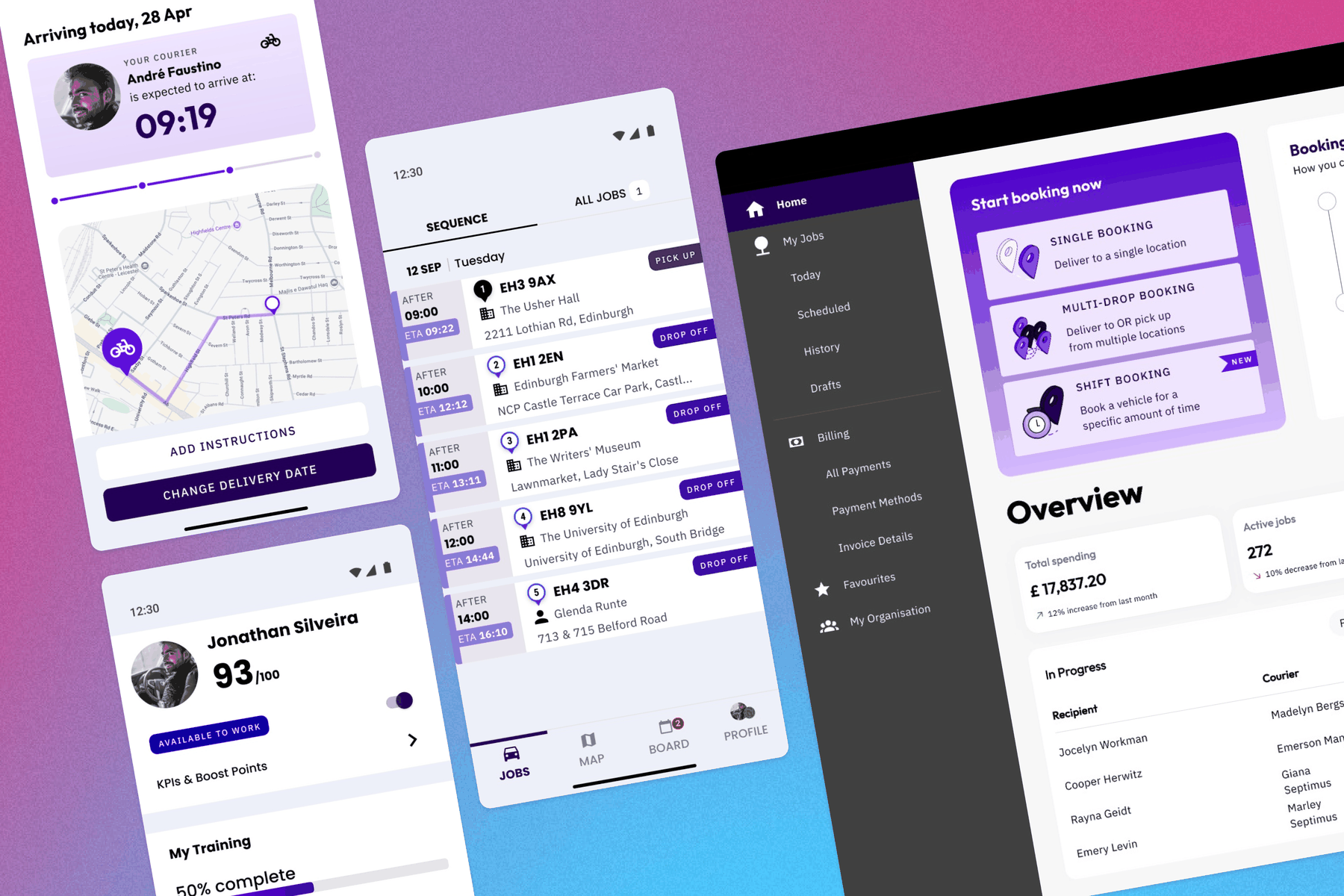
The audit revealed something unexpected: the three previous designers hadn't disagreed, they'd never talked. Each had built patterns in isolation, leaving 47 button variants, 12 colour palettes and zero documentation. I interviewed customers and couriers in their actual environments: office desks, delivery vans, warehouse floors. Booking users wanted speed and clarity; couriers needed glanceability and one-thumb operation. Different contexts, same inconsistency.
Systems as leverage, not hygiene
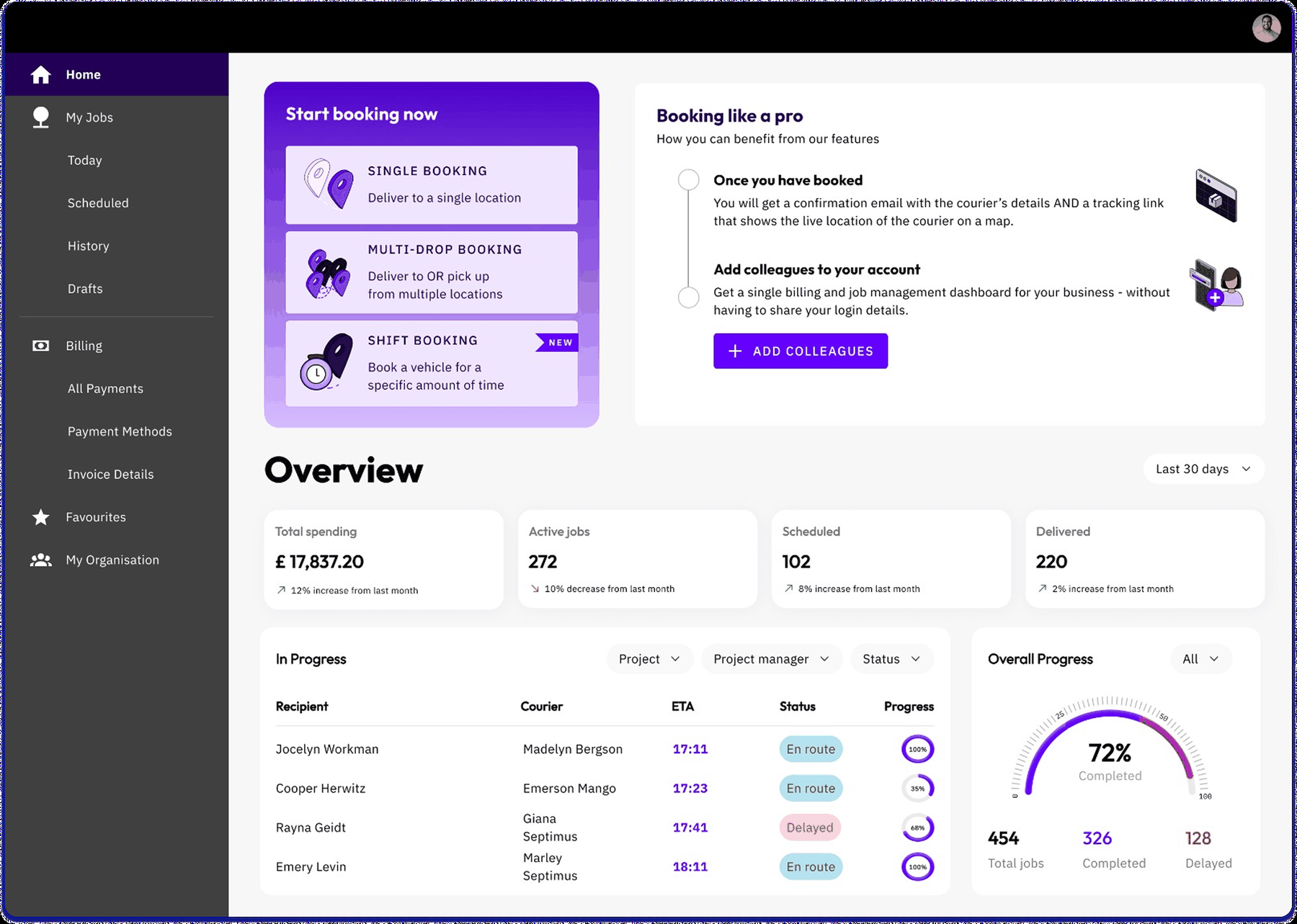
Atomic Design let me build once and compose infinitely: tokens and atoms shared across platforms, molecules and organisms adapted to each context. I defended the upfront investment to a lean team under delivery pressure: the first month felt slow because I was building foundations, by month three I was shipping roughly twice as fast. The system wasn't the work; it was what made a one-person design function viable at that scale. What made it durable was governance: shared vision with engineering, a review process for new variants, documentation past Figma.
Key decisions
01
Invested a slow month to ship twice as fast
The trade-off was upfront investment under delivery pressure, and I argued it openly. The 47% development efficiency gain came from that foundation, across 10K+ enterprise accounts and 10K+ couriers.
02
Moved up the stack once delivery ran itself
Once the systems ended the firefighting, my time moved to roadmap trade-offs and what not to build: a compliance solution that protected the company from legal exposure while expanding fleet capabilities, and AI automation in customer service that cut support volume without degrading quality.
03
Interviewed users where the work happens
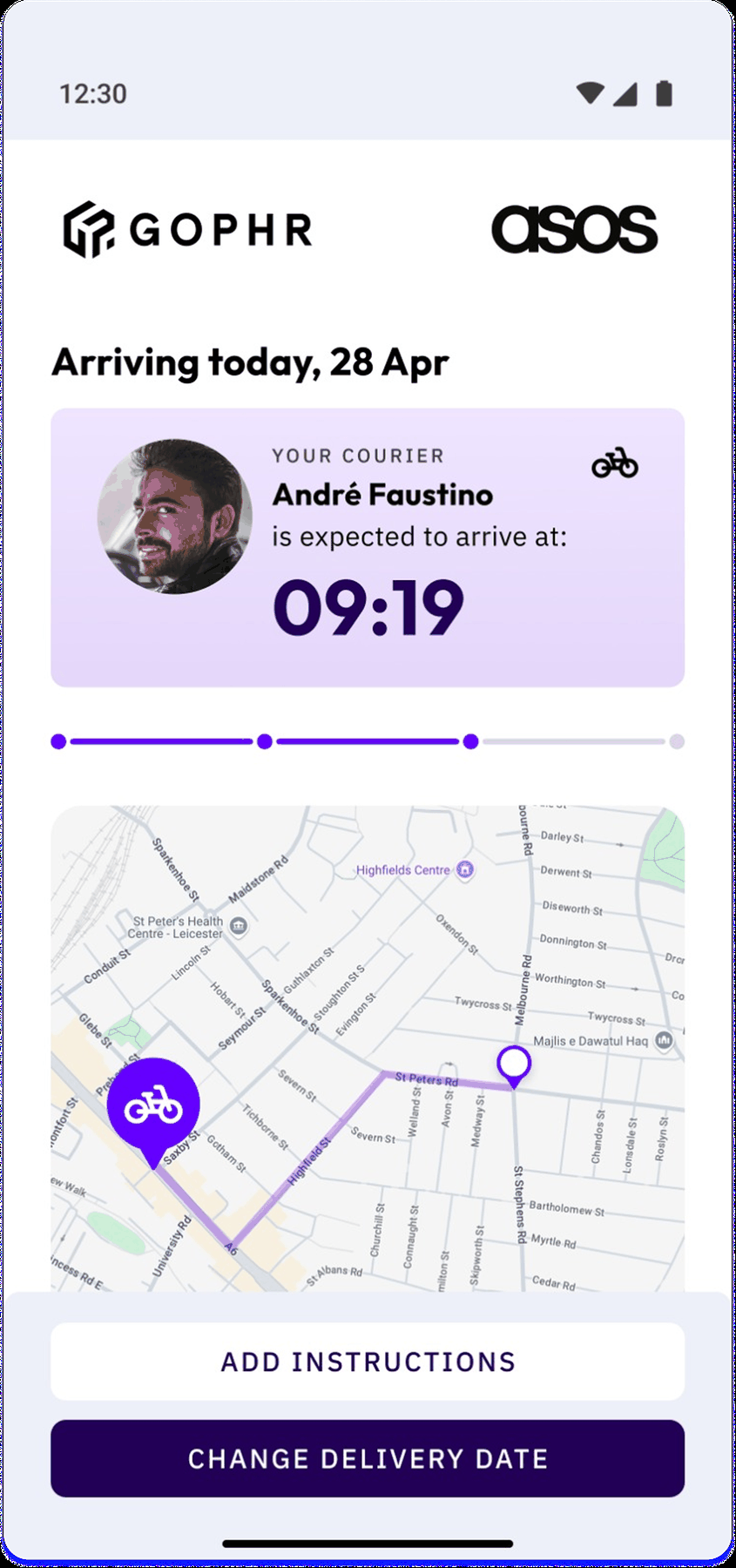
Office desks, delivery vans, warehouse floors. Booking users wanted speed and clarity; couriers needed glanceability and one-thumb operation. Different contexts, same inconsistency, and the systems split accordingly.
04
Diagnosed the chaos as a communication failure
The audit's surprise: three previous designers hadn't disagreed, they'd never talked. 47 button variants and 12 palettes weren't a craft problem but an isolation problem, which is why governance mattered as much as the system itself.
05
Built one foundation for two products
Atomic Design meant tokens and atoms shared across both platforms, molecules and organisms adapted per context: build once, compose infinitely. It's what made a one-person design function viable across 10K+ accounts and 10K+ couriers.
06
Made the system survive without me
Shared vision with engineering, a review process for new variants, documentation past Figma. The test of a system built by one designer is what happens when contributors aren't that designer, and it held its shape.
Outcome
The seat at the table was earned, not granted: strategy shaped as a peer with the CEO and CTO, research orchestrated across 5 teams and 3 squads, 80% on-time launches across 10+ features, and systems that held their shape under contributors who weren't me.
47%
Development efficiency increase
40%
User engagement increase
30%
Faster feature delivery