Enterprise AI · Document intelligence
Bottleneck by Design
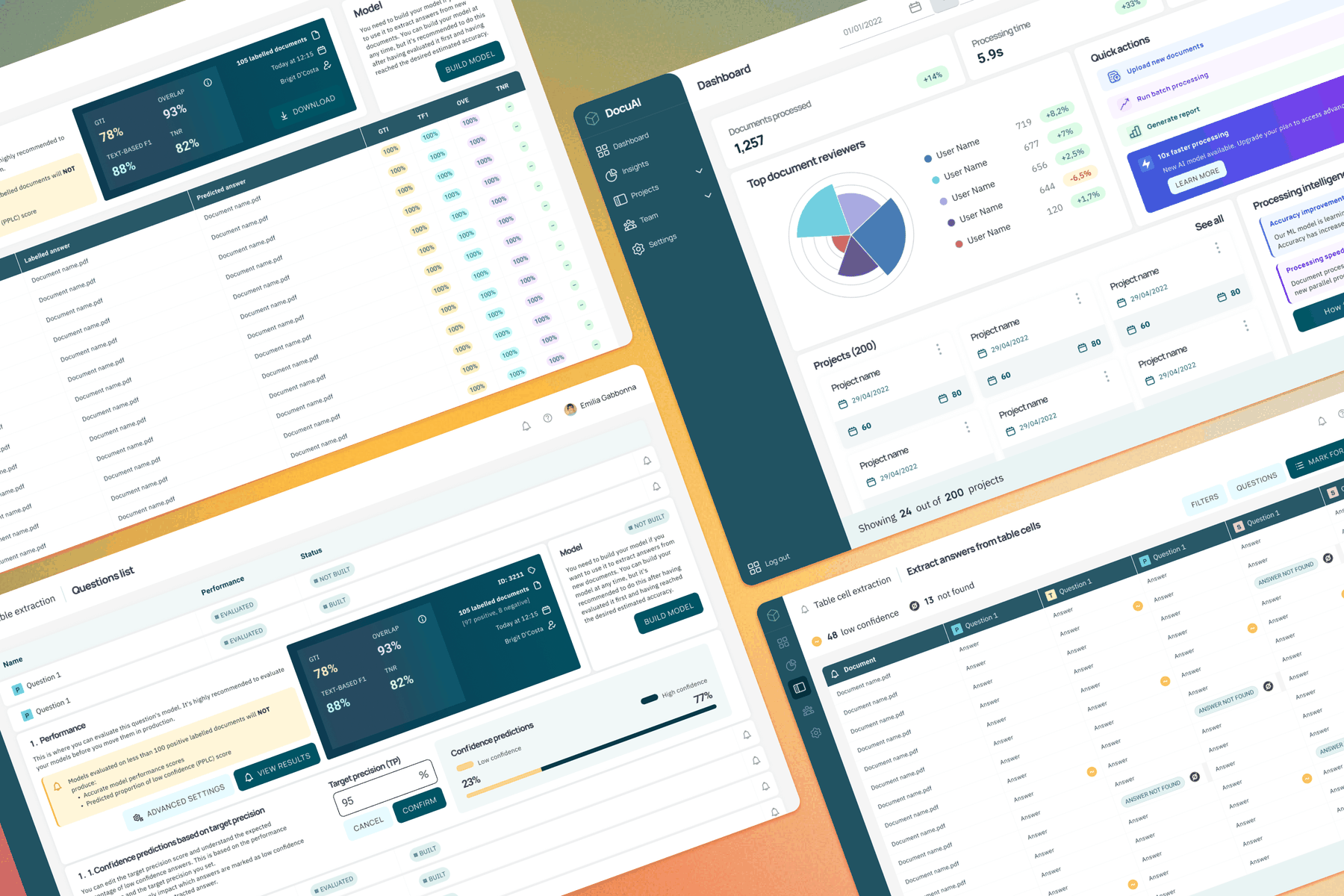
Document review at global banks and professional-services firms queued behind one expert at a time. I reframed it as a routing problem, not a UI problem: AI handles routine extractions, experts handle edge cases. Reviews that took a week now finish in under a day.
- 87%
- Faster document processing
- 75%
- Reduction in errors
- 93%
- User satisfaction score
- Role
- Senior Product Designer
- Focus
- AI collaboration system
- Duration
- Jan 2021 – Apr 2022
Led design across 6 engineering squads post-restructure. Stepped into a consultancy leadership role, directly mentoring 2 designers through delivery while managing 4 concurrent feature initiatives.
The real problem wasn't speed. It was isolation
Stakeholders wanted faster individual processing: the same workflow, accelerated. User research with financial services and legal teams showed the bottleneck wasn't technical but organisational. Subject matter experts had become gatekeepers rather than collaborators; documents queued in inboxes while decisions waited. No interface polish fixes an org-shaped bottleneck. Optimising the wrong unit of work just gets you to the wrong answer sooner.
Review redesigned as collaboration
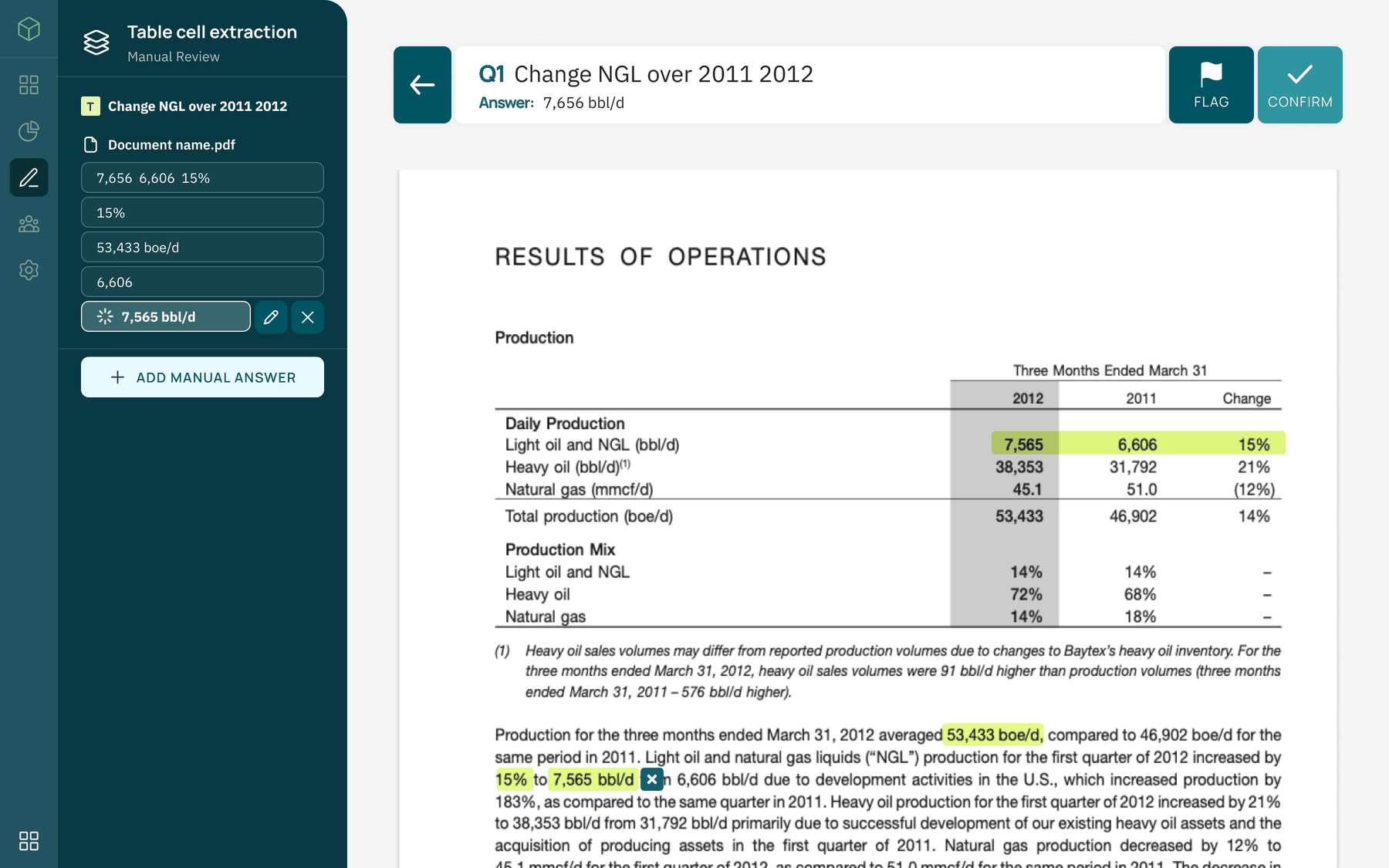
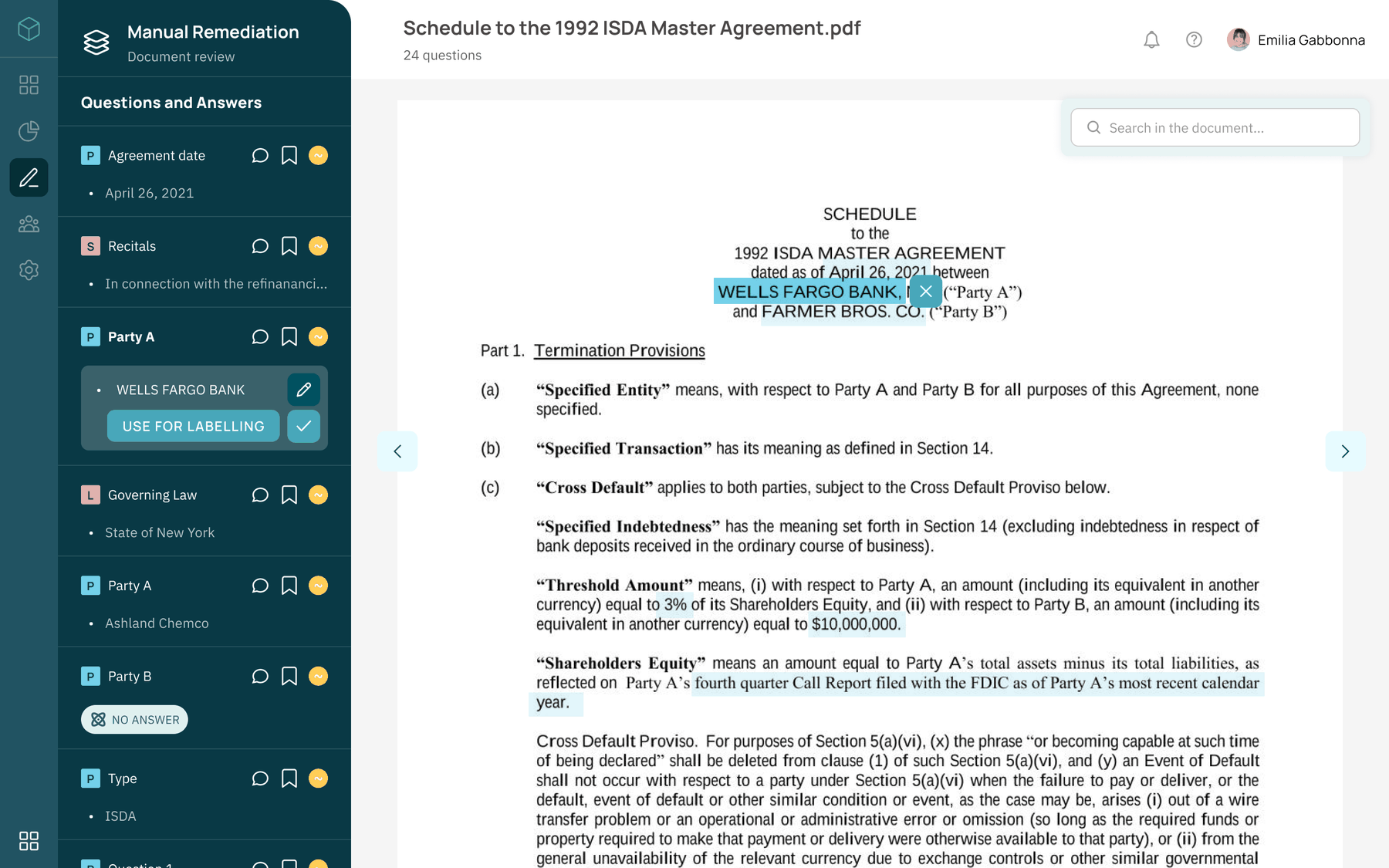
I designed three interconnected systems: team-based document pools allocating by complexity and expertise, parallel review workflows with real-time status, and conflict resolution for overlapping edits. Parallel work introduces coordination overhead, so I made status visible at every level: coordination happened through the interface rather than through meetings. As one enterprise operations director put it, work that previously took a full week now happens in less than a day.
Key decisions
01
Rejected 'same workflow, accelerated'
What if document review wasn't an individual task at all, but a collaborative intelligence system? That reframe, against the stakeholder ask, is where the 87% came from.
02
Built quality that scales through other people
Across 6 squads and 4 concurrent initiatives, personally maintaining quality stops being possible. I built the critique cadence, review standards and documentation that let quality scale through the 2 designers I mentored, which changed how I've operated ever since.
03
Optimised the right unit of work
Stakeholders measured individual processing speed. Research showed documents queued behind one expert at a time, so I moved the unit of work from the reviewer to the team. Optimising the wrong unit just gets you to the wrong answer sooner.
04
Made status visible instead of holding meetings
Parallel review introduces coordination overhead, so I made status visible at every level of the interface: team pools, live review state, conflict resolution for overlapping edits. Coordination happened through the product rather than through meetings.
05
Routed by complexity, not by queue position
AI handles routine extractions; edge cases route to the right expert by content classification. Experts stopped being gatekeepers and became the escalation path, which is what collaborative intelligence actually means.
06
Led six squads through a restructure
Design continuity across 6 engineering squads and 4 concurrent initiatives, while mentoring 2 designers through delivery. The system shipped because the design leadership held, not just the screens.
Outcome
Client-reported outcomes: 87% faster processing, 75% fewer errors, 93% satisfaction. The lesson I carry forward: technical solutions must support how organisations already work, not force new behaviours.
87%
Faster document processing
75%
Reduction in errors
93%
User satisfaction score