Media · Broadcaster, via consultancy
Revenue Ceiling
A major UK broadcaster's ad booking ran on email chains and error-prone spreadsheets, capping how many campaigns could run at all. I led the redesign into a self-service platform, and designed for adoption before efficiency, because the platform only pays back if agencies actually switch.
- 2.5x
- First-year ROI against build cost
- 89%
- Efficiency gain to self-service
- 98%
- Fewer booking errors
- Role
- Senior Product Designer
- Focus
- Self-service platform
- Duration
- Nov 2019 – Jan 2021
Owned end-to-end design through strategic workshops and rapid prototyping, working with Product Managers, the Sales team, Account Managers, Media Planners and Buyers, and Engineers.
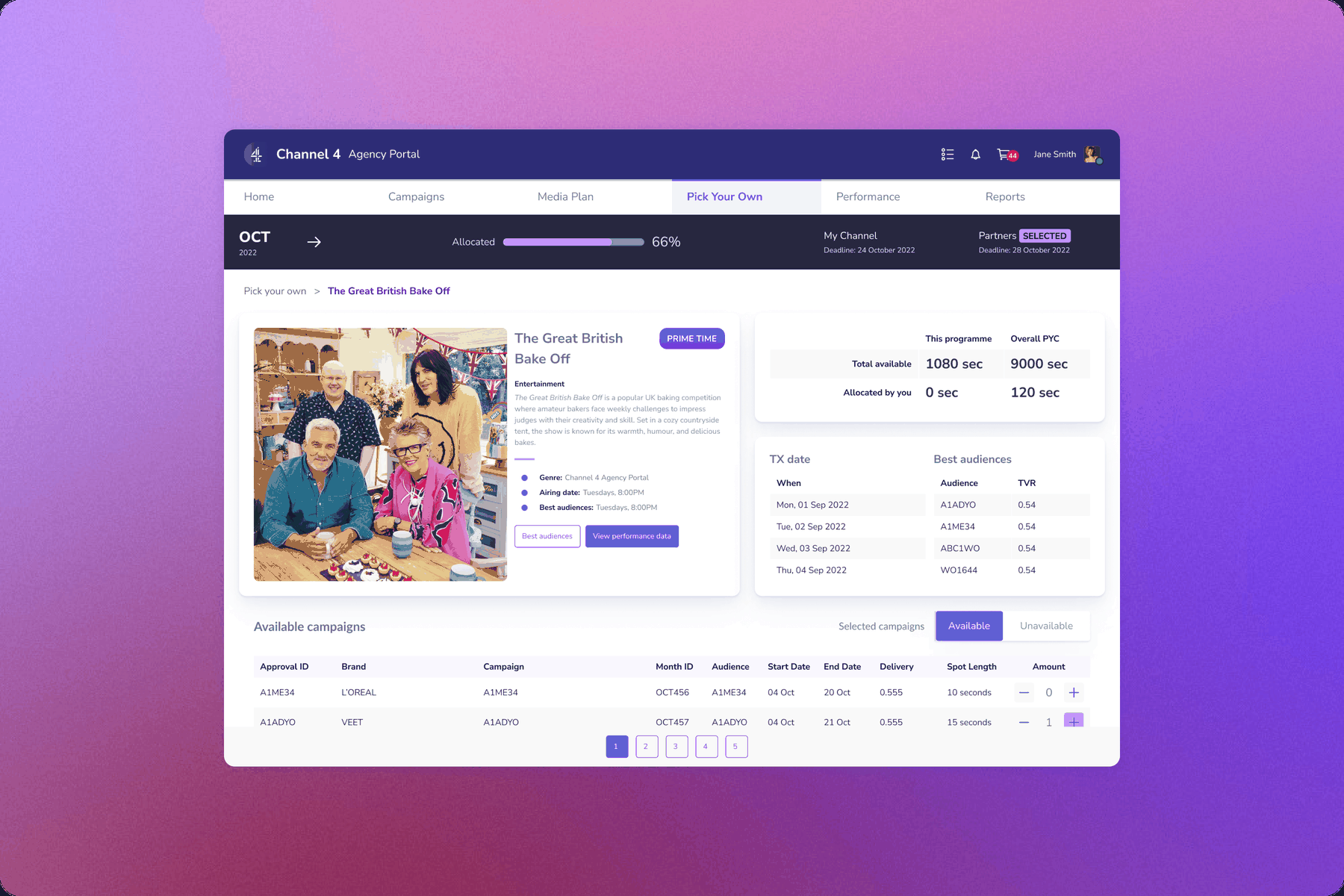
The stated problem vs the real problem
The stated problem was 'we need a better booking system'. The real problem: the manual process limited how many campaigns could be processed at all, an artificial ceiling on ad revenue, with sales teams spending 70% of their time on administration instead of the agency relationships that grow accounts. With streaming squeezing TV advertising, this was a commercial-strategy problem wearing a tooling costume.
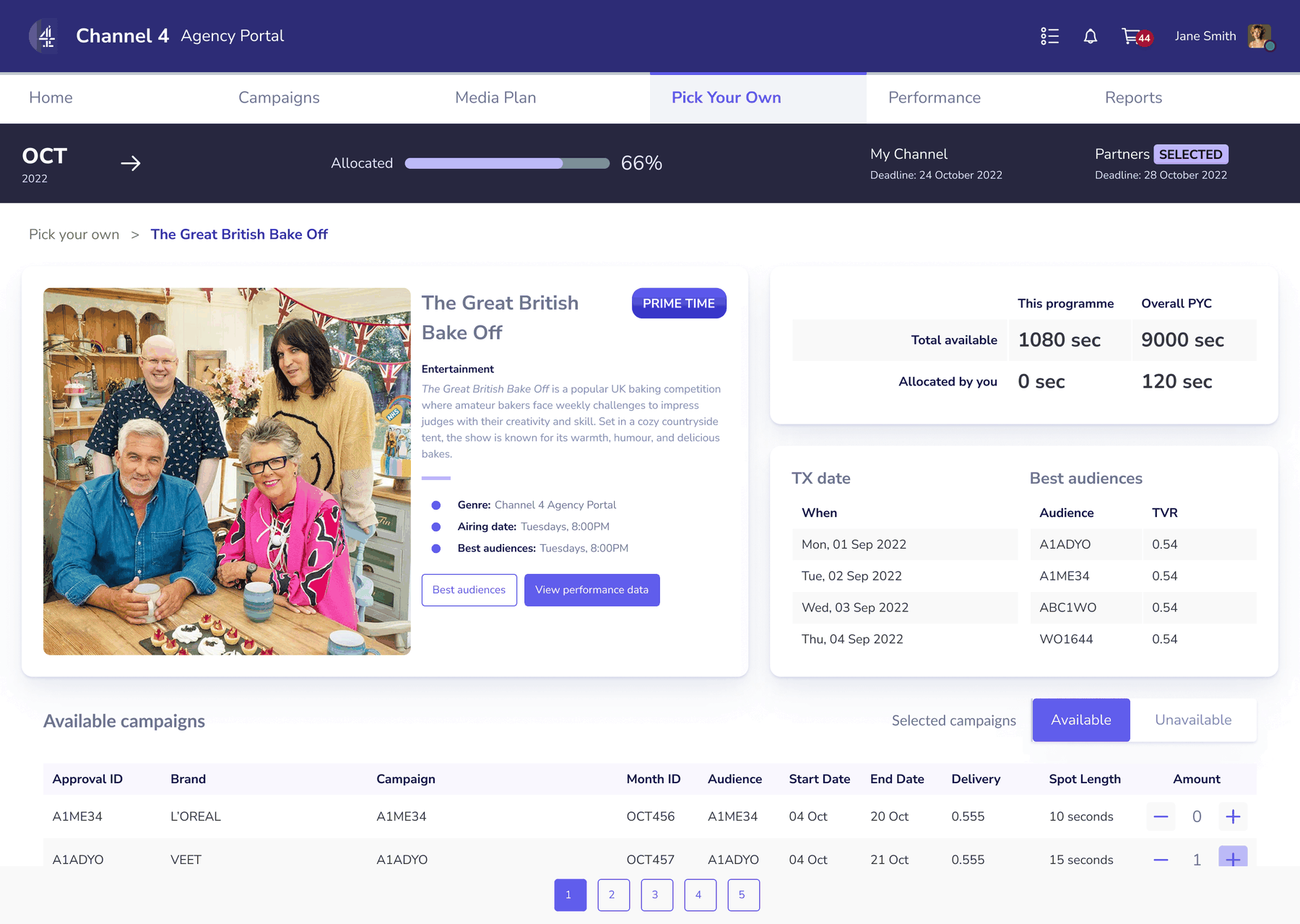
Trust before efficiency
Familiar patterns and clear fallback options created a safety net that made exploration feel low-risk. Agencies could allocate TV commercials independently, access real-time programme metrics and make smarter placement decisions. Multiple departments held competing priorities, so I developed a structured workshop approach that visualised trade-offs and made each team's constraints visible rather than pretending they didn't exist; it became the consultancy's template for cross-functional engagements.
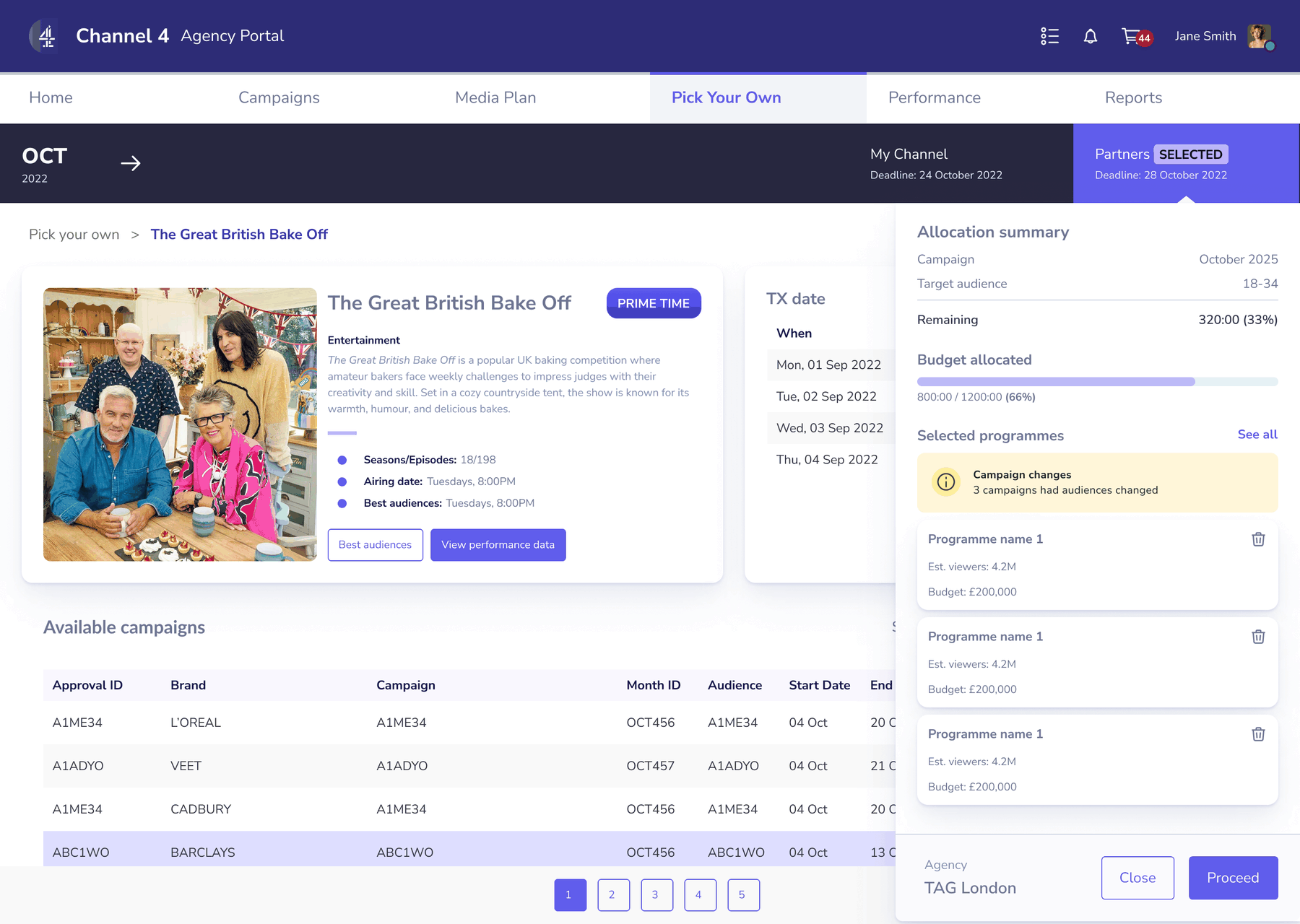
Key decisions
01
Prioritised adoption over feature completeness
The first release deliberately lacked some capabilities the old spreadsheet workflow had. Advocates' feedback shaped what came next, and the numbers only exist because adoption came first.
02
Treated accessibility as a design driver
Alongside that broadcaster work, I redesigned a national library's website on a WCAG-compliant design system, cutting navigation paths by 45% and lifting researcher satisfaction from 42% to 87%. Accessibility improves the experience for everyone; it isn't a compliance constraint.
03
Renamed the problem: revenue ceiling, not tooling
The stated ask was 'a better booking system'. The manual process capped how many campaigns could run at all, with sales spending 70% of their time on admin. I reframed it as a commercial-strategy problem wearing a tooling costume, and the design brief changed with it.
04
Designed for psychological safety first
Discovery showed users were attached to their spreadsheets. Familiar patterns and clear fallback options made exploration feel low-risk; users who trusted the system enough to try it became its advocates.
05
Made competing priorities visible in workshops
Multiple departments held conflicting constraints, so I built a workshop format that visualised the trade-offs instead of pretending they didn't exist. It became the consultancy's template for cross-functional engagements.
06
Let advocates shape the roadmap
The first release shipped without full spreadsheet parity, deliberately. Early adopters' feedback decided what came next, and the 89% efficiency gain and 98% error reduction only exist because adoption came first.
Outcome
Where there was friction, there's now partnership: self-service capabilities that empowered agency teams and elevated the strategic conversations, delivered through consensus across departments that rarely agreed.
2.5x
First-year ROI against build cost
89%
Efficiency gain to self-service
98%
Fewer booking errors